Today's Fact
A time traveller came to ancient Egypt hunting a future god — and the hunt itself is what manufactured him.
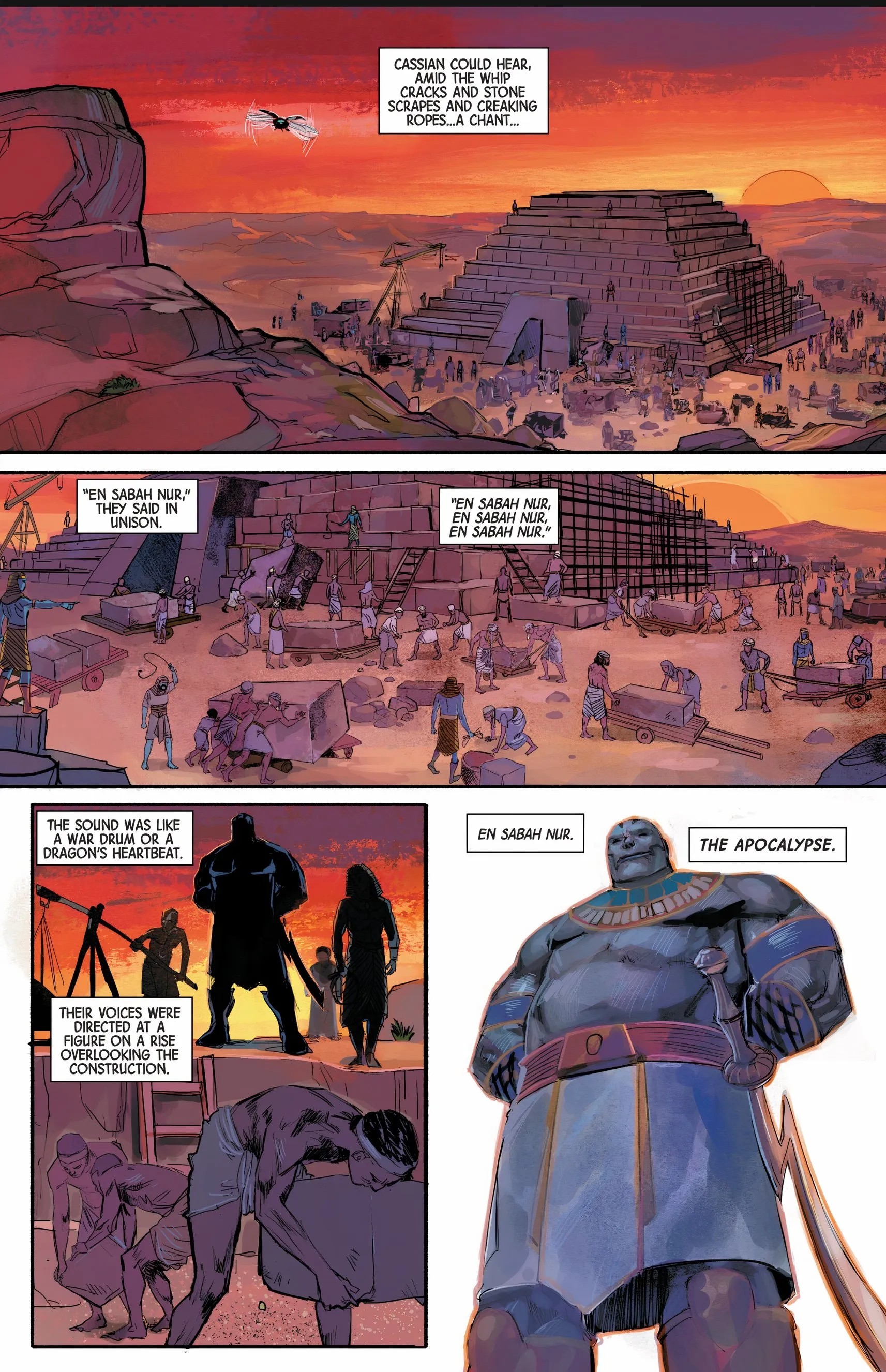
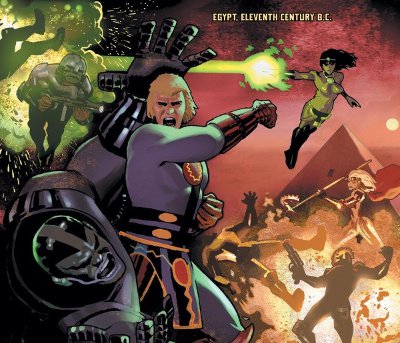
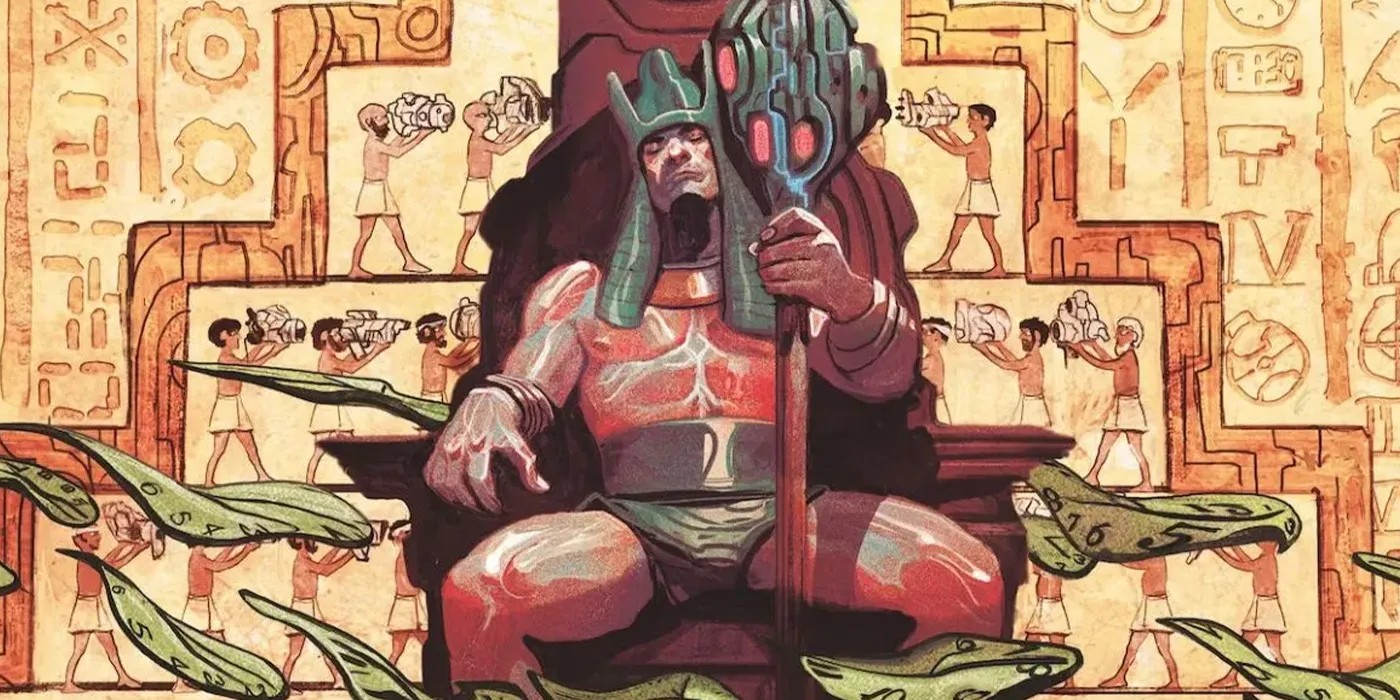
The Rise of Apocalypse #1–4 (1996) fills in the boyhood of En Sabah Nur, the grey-skinned foundling raised by Baal of the Sandstormers. Watching Egypt from the future was Pharaoh Rama-Tut — secretly Kang the Conqueror, who had travelled back five thousand years precisely because he knew what Nur would become, and wanted that future weapon raised as his heir.
Rama-Tut's armies slaughtered the Sandstormers to get at the boy, and Baal died in a cave of buried alien technology prophesying greatness. Nur's answer was infiltration, not flight: he entered Rama-Tut's own city disguised as a slave, working inside the pharaoh's household while he plotted revenge under the conqueror's nose.
Inside the court he fell for Nephri, sister of the general Ozymandias — and when she finally saw his true grey, inhuman face, she recoiled from him in horror. That rejection detonated what slavery and massacre had not: Nur's mutant power erupted in full, Rama-Tut fled his own kingdom, and the slave walked out of the wreckage with a new name — Apocalypse.
Why It's Obscure
Kang went shopping for an heir and came home with an extinction event — time travel's worst purchase, five millennia running.
Gallery
Comic art of En Sabah Nur, ancient Egypt, and the time-travelling pharaoh who hunted him.
Sources
Every fact on this page was checked against at least two independent sources before publication.
Bullpen Bulletins
- The Rise of Apocalypse — WikipediaPlot record of the 1996 Kavanagh/Pollina mini-series: Baal's raising of Nur, Rama-Tut revealed as Kang seeking him as heir, the slave disguise, Nephri's rejection, and the naming of Apocalypse.
- X-amining Rise of Apocalypse #1–4 — Gentlemen of LeisureIssue-by-issue examination of the mini-series, confirming Kang's motive for coming to Egypt, the Sandstormers' destruction, and Nur's infiltration of the pharaoh's city as a slave.