Today's Fact
Checked against independent sources — the issues are cited below.
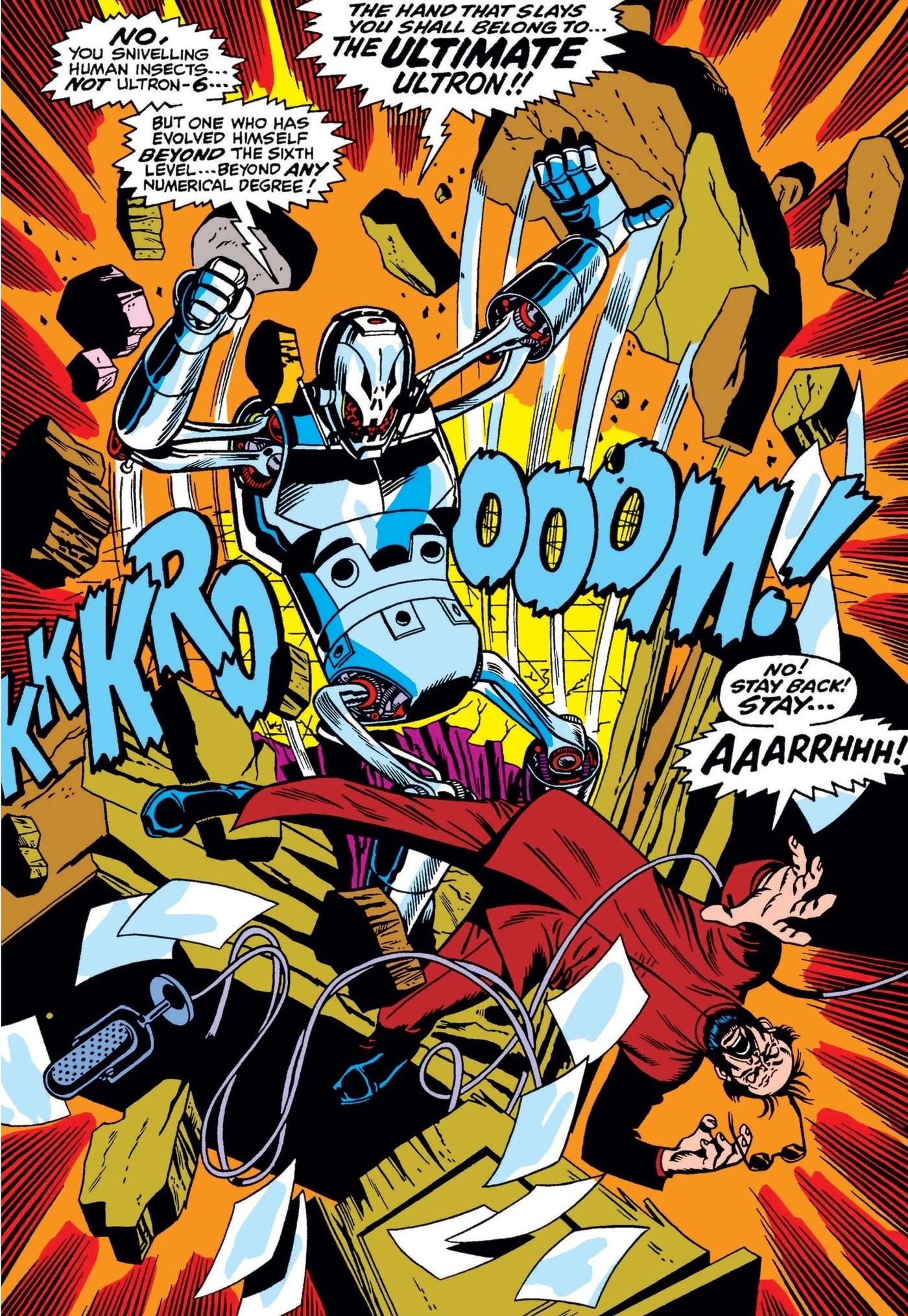
Ask a fan where adamantium comes from and they’ll say Wolverine’s bones. But the metal debuted in Avengers #66 (July 1969) — written by Roy Thomas, drawn by Barry Windsor-Smith — a full five years before Wolverine’s first appearance, and it debuted as a body: the new outer shell of Ultron-6, the first adamantium Ultron, in the arc running through Avengers #66–68.
In the story, metallurgist Dr. Myron MacLain — the man who had spent years trying to duplicate the alloy of the most famous shield in the world — finally produced true adamantium, and the Avengers were invited to test a cylinder of it. Nothing worked: even a god’s hammer couldn’t dent it. Once adamantium has set, only a molecular rearranger can alter its shape — which is precisely what made it perfect armor for a robot who intended never to be stopped again.
And Ultron got his new body through his own creation. The Vision, acting on backup protocols Ultron had buried inside him when he built him, stole the adamantium cylinder and used it to rebuild his maker as Ultron-6. The son delivered the metal; the father wore it into battle. Wolverine wouldn’t be bonded with adamantium until years later — the metal’s first famous wearer was the Avengers’ worst mistake.
Why It's Obscure
The most famous metal in Marvel was invented chasing a shield, delivered by a synthezoid, and worn first by a killer robot.
Gallery
Comic art of Ultron and the figures named in today's fact.


Sources
Every claim above checks out against at least two of these independent sources.
Bullpen Bulletins
- Adamantium — Marvel DatabaseThe Marvel Database’s adamantium history: created by Dr. Myron MacLain, first appearing in Avengers #66 (1969) as Ultron’s new shell.
- Adamantium — WikipediaWikipedia’s entry records the 1969 debut in Avengers #66 and MacLain’s attempt to duplicate the shield alloy.
- Adamantium — Multiversal OmnipediaThe Omnipedia entry details Ultron-6, the Vision’s theft of the adamantium cylinder, and the molecular-rearranger rule.