Today's Fact
Most X-Men have a resurrection story. Hers involves stellar plasma, a parasitic embryo, and an infant whale the size of a starship.
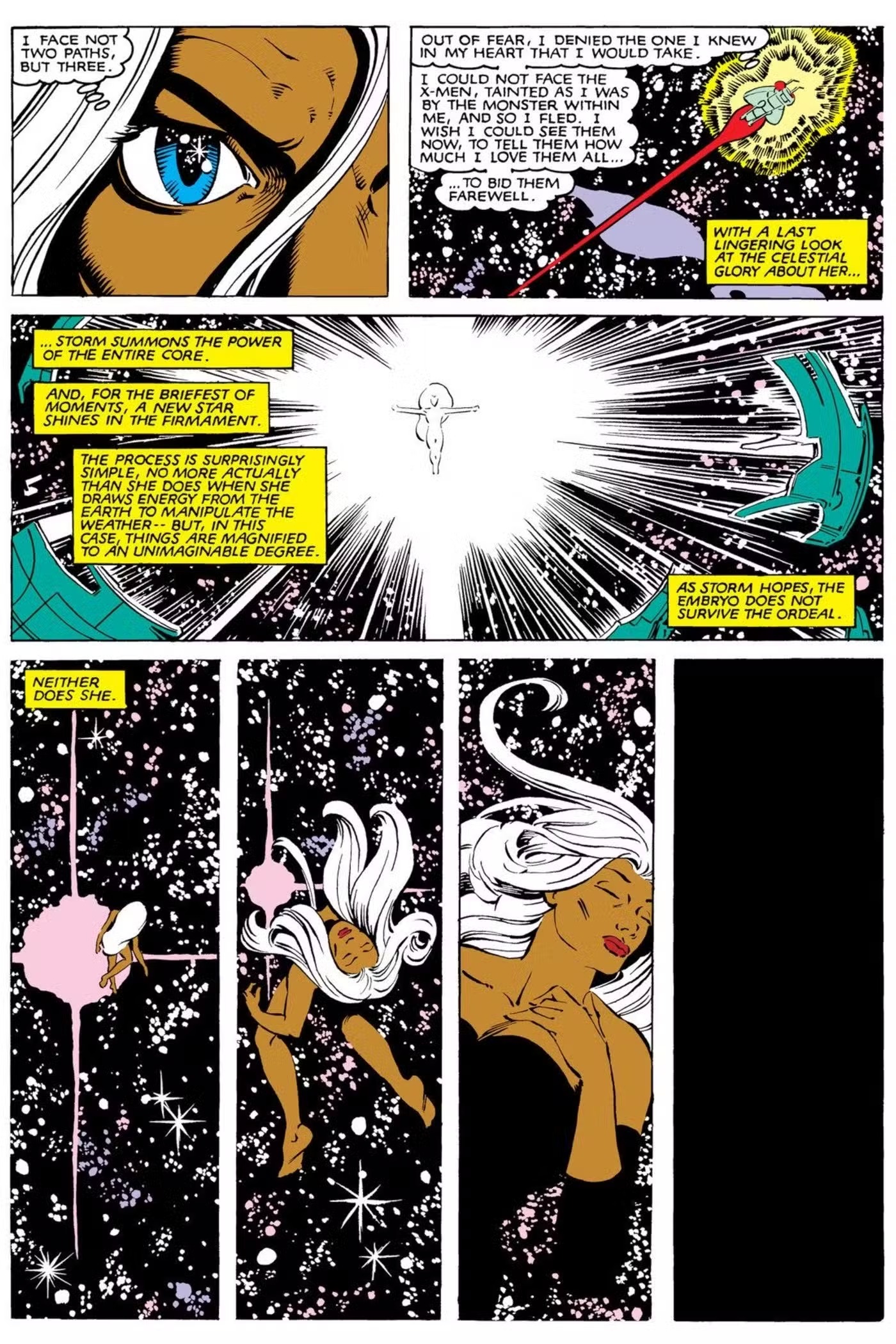
Aboard a Brood hunt, Ororo Munroe realises before anyone else that a Brood embryo is growing inside her, rewriting her body toward a new Queen. In Uncanny X-Men #165 (1983), by Chris Claremont and Dave Cockrum, she refuses the transformation outright and chooses a third path nobody offered her: her own death, on her own terms.
Drifting alone into hard vacuum, Storm does with the galactic core what she normally does with a thunderhead — she draws its energy through herself at full, lethal scale. The stellar flare kills the embryo instantly. It also, as the narration states flatly, kills her.
What the Brood never planned for was the Acanti, the vast spacefaring whales they enslave as living ships. A newborn Acanti Prophet-Singer, born too early and needing a guiding consciousness, finds Ororo's drifting body, bonds with her, and slowly heals her back to life — the resurrection completed across Uncanny X-Men #166 (1983).
Why It's Obscure
Before Krakoa made dying routine, Ororo Munroe arranged her own death in deep space — and negotiated her way back out of it.
Gallery
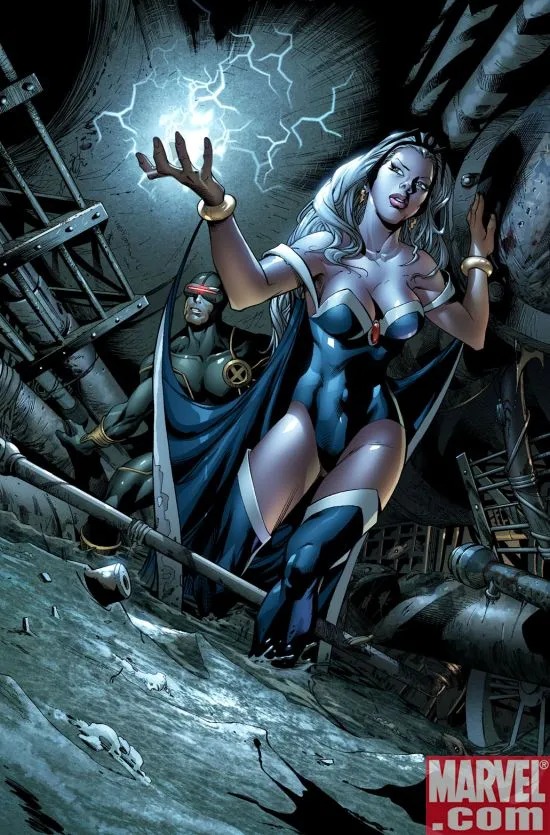
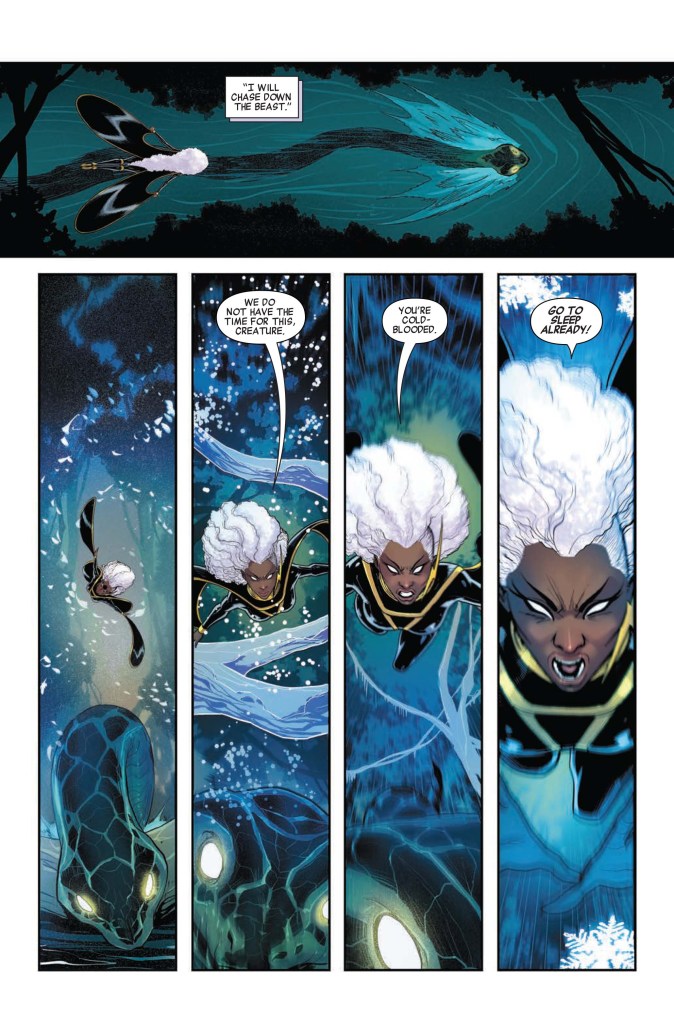
Comic art tied to today's fact.
Sources
Every claim above checks out against at least two of these independent sources.
Bullpen Bulletins
- Uncanny X-Men Vol. 1 #166 — Marvel DatabaseThe issue synopsis confirms Storm purged the Brood embryo in an act that effectively killed her, and that the infant Acanti bonded with and healed her.
- Brood survivors: Storm — uncannyxmen.netThe Brood reference records Storm's infection between #161 and #162, her lethal absorption of cosmic energy, and her revival by the prematurely born Acanti Prophet-Singer.