Today's Fact
Jennifer Walters did not just notice the audience watching her — she treated the comic itself as a door, a shortcut and occasionally a complaints desk.
When John Byrne relaunched Jennifer Walters in The Sensational She-Hulk Vol. 1 #1 (1989), his founding idea, arrived at on a subway ride home, was disarmingly simple: she knows she is in a comic book. From the first cover onward — where Jen warned readers that skipping her book would cost them their X-Men collections — She-Hulk addressed the audience directly, argued with her writer and editor, and treated the medium as part of her environment.
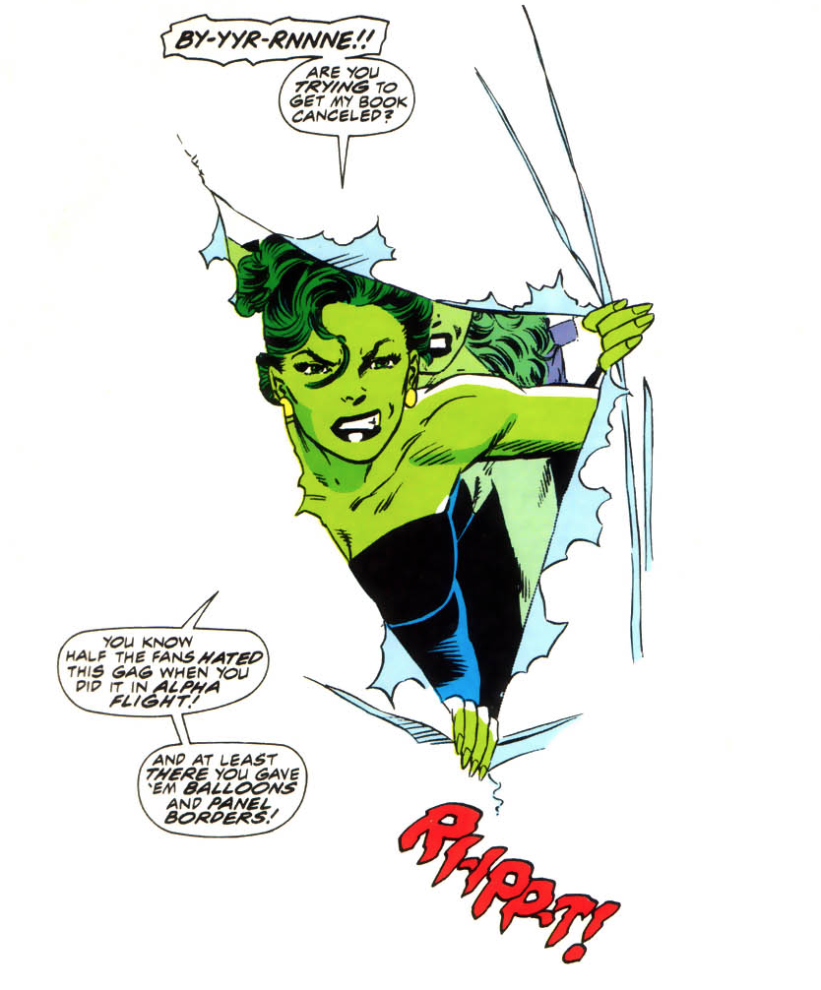
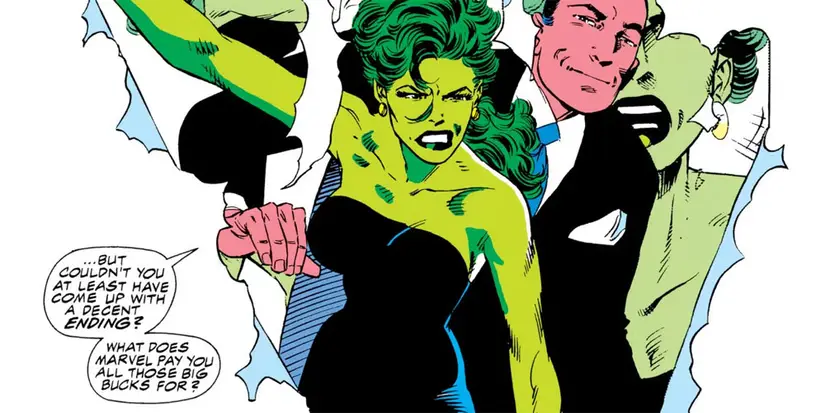
She weaponised that awareness. Jen tore through pages to reach villains faster, stepped across panel borders, grabbed narration boxes, and once ripped her way through an advertising page inside her own issue to get back to the plot. Fighting the Living Eraser in issue #37, she burst through the blank pages he left behind and shouted up at Byrne that half the fans had hated the same gag in Alpha Flight — a complaint you can read for yourself in the gallery, mid-tear.
The chronology is the punchline Marvel rarely advertises: all of this began in 1989, two full years before Deadpool first appeared in The New Mutants #98 (1991), and nearly a decade before that character became famous for talking to readers. The fourth wall's most famous Marvel tenant moved into a building Jen Walters had already been demolishing for years.
Why It's Obscure
Other heroes break the fourth wall in interviews and asides. Byrne's Jen Walters broke it with her hands, on-panel, as a travel method.
Gallery
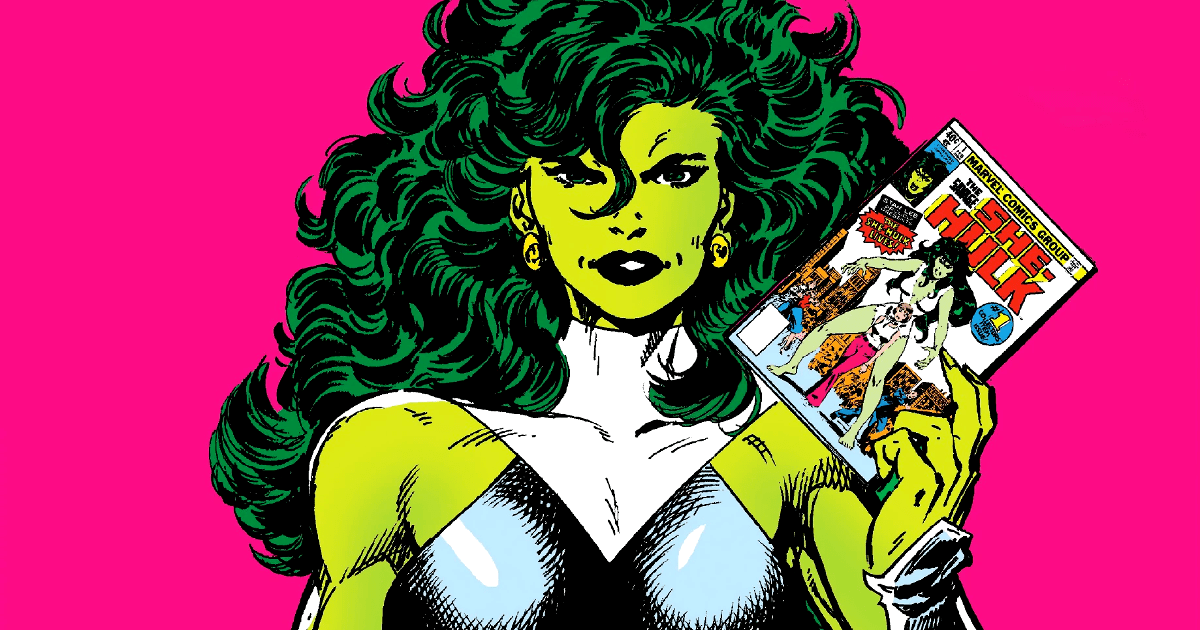
Jen Walters caught in the act — tearing through the page in both shots, and holding her own first issue in the third.
Sources
Every fact on this page was checked against at least two independent sources before publication.
Bullpen Bulletins
- Marvel's She-Hulk Was Its First Fourth-Wall-Breaking Superhero — PolygonHistory of Byrne's 1989 Sensational She-Hulk: tearing holes in pages to skip plot, calling for cutaways mid-beating, and doing it two years before Deadpool was created.
- How She-Hulk Smashed the Fourth Wall (Before Deadpool) — SideshowAccount of Jen tearing through an advertising page inside her own story, fighting editor Renée Witterstaetter and Byrne, and threatening readers' X-Men comics on the first cover.
- Funniest Times Comics Broke the Fourth Wall — CBRIncludes issue #37: She-Hulk rips through the Living Eraser's blank page and yells at John Byrne, afraid the gag might cancel her book.