Today's Fact
Thirteen years before the horned helmet existed, a red, devil-faced Loki was already scheming on Earth — for a completely different pantheon.
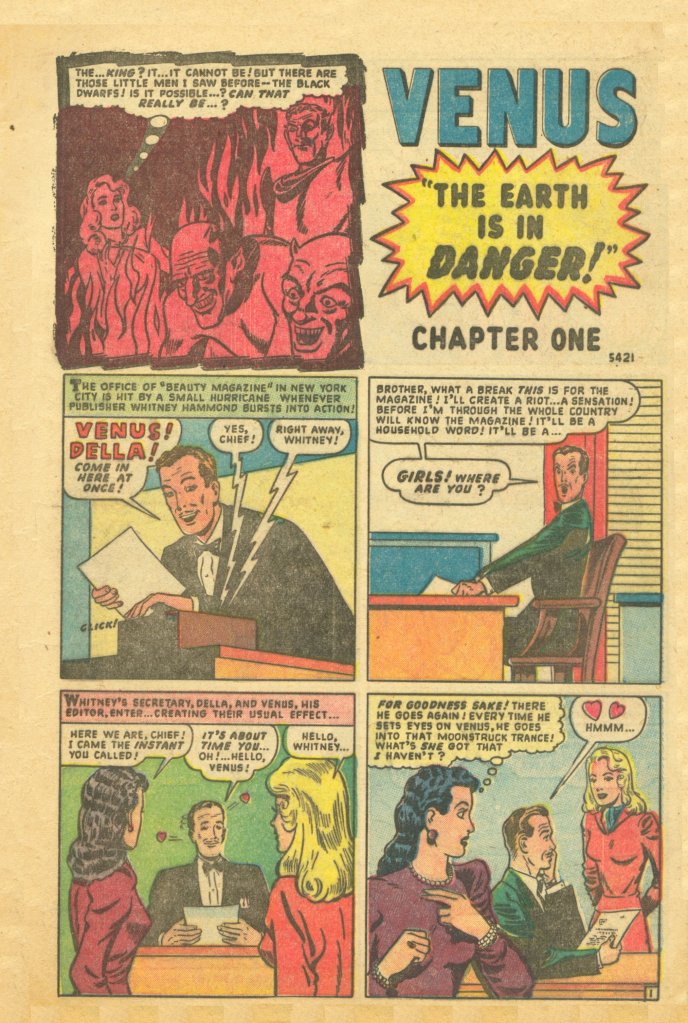
The first Loki in a Marvel-lineage comic appears in Venus #6, cover-dated August 1949 and published by Timely Comics, the company that later became Marvel. This Loki is no Asgardian and no Frost Giant: the story presents him as one of the Olympian gods, drawn with a devil's face and horns, banished to the Underworld for his malice.
In that debut he talks Jupiter into letting him visit Earth, arguing that if Venus is allowed up there, he should be too — his real plan is to spread hatred among mortals. Venus offers to pledge herself to Loki's service if that is what it takes to stop him, and Jupiter, moved by the selfless bargain, releases her from the pledge and sends Loki back below.
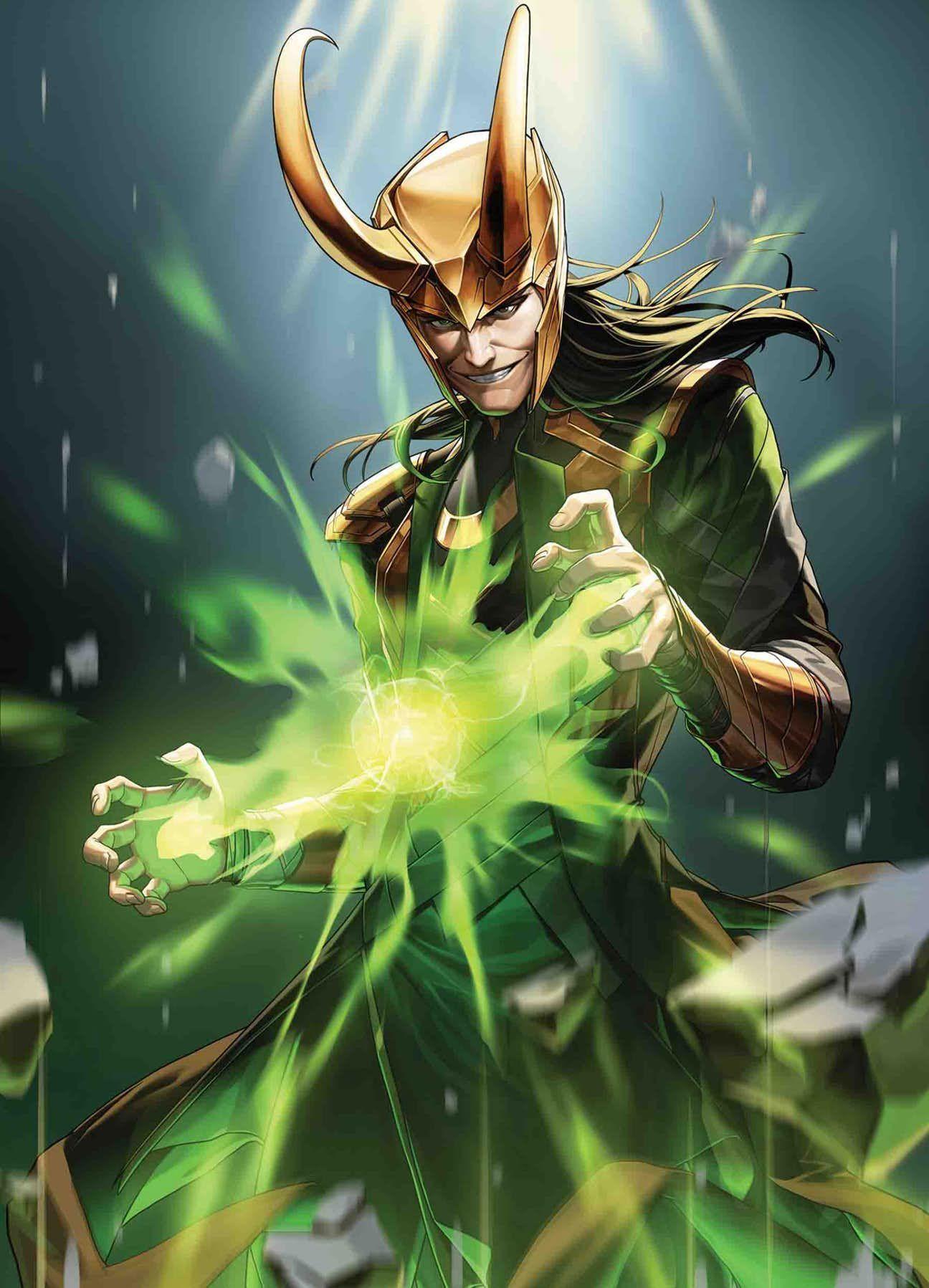
The character returned in several more Venus stories — trying to seize Olympus in Venus #7 and cutting deals with demons in Venus #9 — before vanishing. When Stan Lee, Larry Lieber and Jack Kirby reinvented him in Journey Into Mystery #85 (October 1962) as Thor's adopted brother, almost nothing of the 1949 version survived except the name, the horns and the habit of causing trouble.
Why It's Obscure
Marvel's own histories usually start Loki's clock in 1962, quietly skipping the thirteen years he spent as somebody else's god of evil.
Gallery
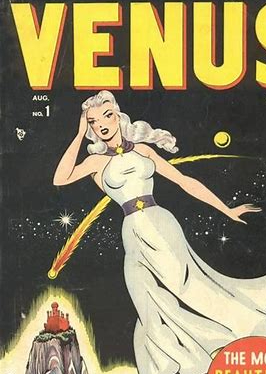
The 1949 story itself, the goddess he tormented, and the Loki who replaced him.
Sources
Every claim above checks out against at least two of these independent sources.
Bullpen Bulletins
- Loki (Marvel Comics) — WikipediaWikipedia's publication history records the Venus #6 (August 1949) version as an Olympian god exiled to the Underworld who persuades Jupiter to let him travel to Earth to spread hate, thirteen years before Journey Into Mystery #85 (1962).
- Didja Know… The Lovably Loathsome Lore of Loki — Marvel.comMarvel's own Didja Know column confirms Venus #6 in 1949 as the first true appearance of Marvel's Loki, "about thirteen or so years" before the Silver Age version, with follow-ups in Venus #7, #9 and #10.