Today's Fact
Checked against independent sources — the issues are cited below.
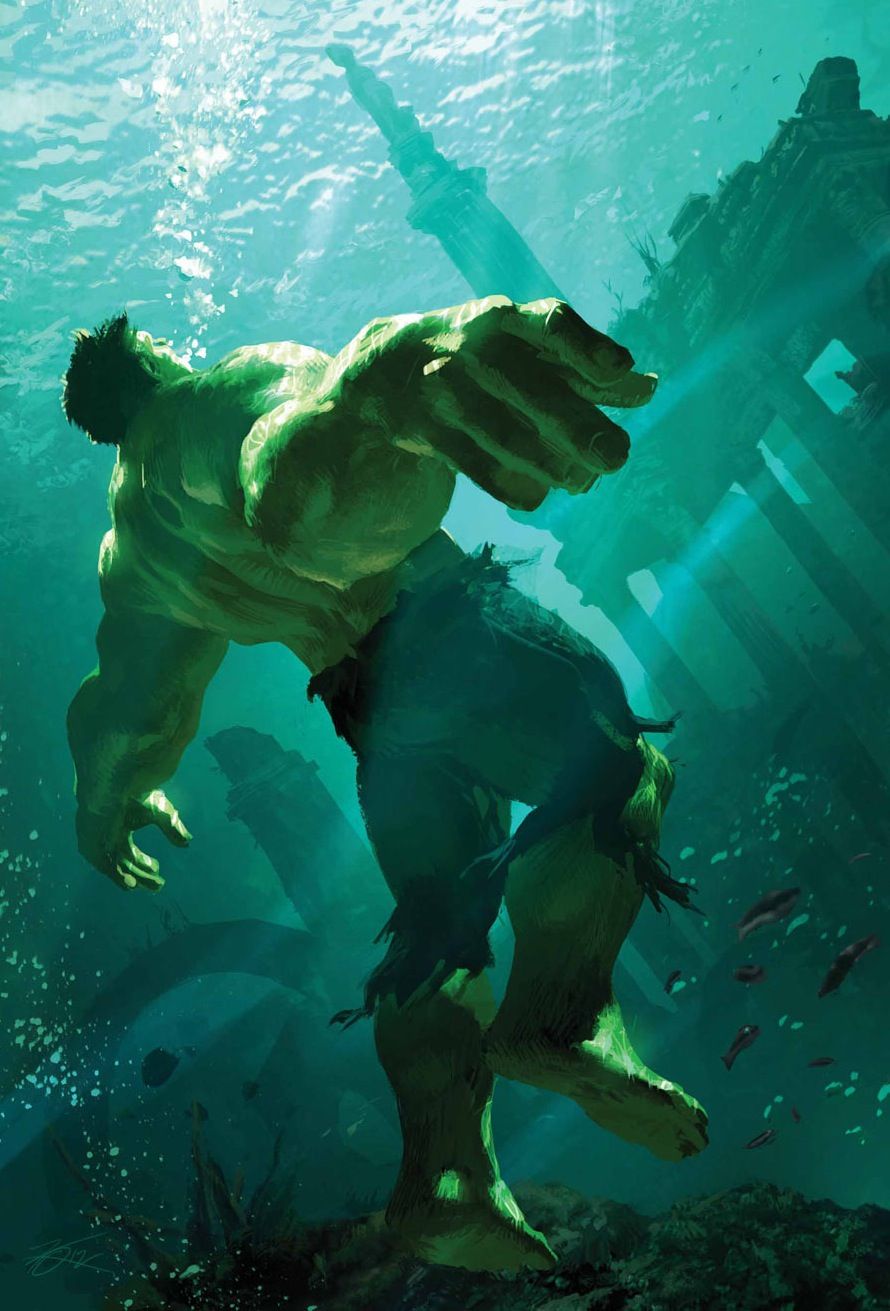
Drowning is one of the few ordinary hazards that should, in theory, work on the Hulk — lungs are lungs. In The Incredible Hulk Vol. 2 #77 (2005), writer Peter David closed that loophole: submerged, the Hulk's body develops a gland that produces an oxygenated perfluorocarbon emulsion, flooding his lungs with breathable liquid while equalizing the pressure around them.
The adaptation is on-demand anatomy. The gland is not standard equipment carried around on dry land; it develops when the environment demands it, one more entry in a physiology that rewrites itself around whatever is currently trying to kill its owner.
The same adaptive logic explains the Hulk's longer résumé of impossible survivals — extended stretches in the vacuum of space and at crushing ocean depths that would end any merely strong creature. Strength gets the posters; improvisation at the cellular level does the quiet work.
Why It's Obscure
The strongest one there is also grows his own scuba gear — internally, on request.
Gallery
Comic art of the Hulk — including the Hulk photographed in his element, underwater.

Sources
Every claim above checks out against at least two of these independent sources.
Bullpen Bulletins
- The Hulk's REAL Superpower Isn't Strength — Screen RantScreen Rant's survey of the Hulk's adaptive powers credits Peter David's Incredible Hulk #77 with the underwater gland that keeps oxygen in his lungs and prevents their collapse.
- 15 Weird Facts About The Hulk's Body — CBRCBR's catalogue of the Hulk's stranger adaptations covers his extended survival without ordinary breathing, in water and in the vacuum of space alike.