Today's Fact
Verified against three independent sources. Issues cited below.
Readers met Maria Trovaya Pym and buried her in the same issue. Tales to Astonish #44 (June 1963) revealed, ten appearances into his run, that Henry Pym had been married before — to a Hungarian political prisoner’s daughter who had escaped the Iron Curtain, married him, and insisted on honeymooning in her homeland despite his dread that the authorities would recognise her.
They did. Communist agents kidnapped Maria on that trip and she was found murdered, a warning to anyone who tried to leave; her father died the same stretch in a laboratory explosion blamed on saboteurs. Pym hunted the killers himself, landed in a Hungarian jail for his trouble, and came home, in the story’s own words, on the verge of a physical and mental breakdown.
What pulled him back to the laboratory was a sentence of Maria’s. Her father’s old proverb — “Go to the ants, thou sluggard” — lodged in the widower’s mind and became his research programme: studying ants led Pym toward his size-changing work and the heroic identity it powered. The very same issue then introduced Janet Van Dyne, whose resemblance to Maria the grieving scientist noticed on sight, and made her the Wasp — meaning Ant-Man’s partner, team and future all trace back to a dead wife’s borrowed proverb.
Why It's Obscure
Plenty of heroes are forged by loss; Pym may be the only one whose origin story is literally a quotation his wife used to tease him with.
Gallery
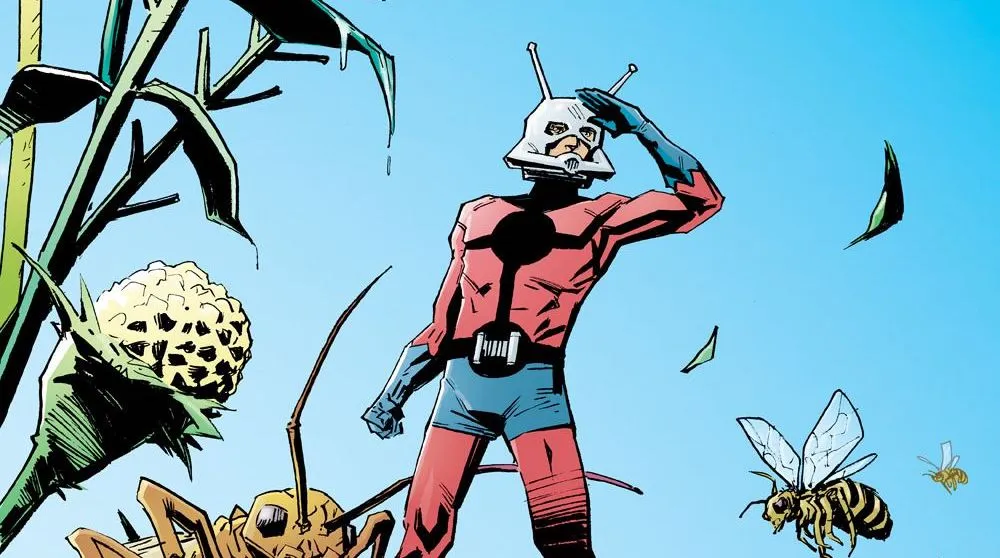
Real depictions tied to this fact.


Sources
Every claim above is verified against at least two of these independent sources.
Bullpen Bulletins
- Tales to Astonish Vol. 1 #44 — Marvel DatabaseThe issue synopsis records Maria’s honeymoon kidnapping and murder in Hungary, Pym’s jailing as he hunted her killers, and his use of her family saying, ‘Go to the ants, thou sluggard,’ as the inspiration for his size-changing formula and Ant-Man identity.
- Maria Pym — WikipediaMaria Trovaya Pym debuted in Tales to Astonish #44 (June 1963) as Hank Pym’s deceased first wife; she was captured and murdered by Communist agents in Hungary after returning there on honeymoon, and she secretly bore his daughter Nadia before her death.
- On Stan Lee and H. E. Huntley’s The Wasp and Ant-Man — SequartSequart’s study of the run details Maria’s murder, Pym’s slide to the verge of a mental and physical breakdown, and how the same issue pivots from that tragedy straight into the introduction of Janet Van Dyne.